
The Antioxidants Level In Pomegranates Is 3x Higher Than Red Wine, Green Tea And Berries
Last updated on
Only recently has pomegranate been rediscovered, and made headlines with new discoveries of its highly restorative medicinal values. However, the impressive health values of this fruit had already been known since ancient days.

The size of a ripe pomegranate can be as small as an orange or as big as a grapefruit, approximately 7-12 cm in diameter, depending on its variety. It has a rounded hexagonal shape, with thick yellowish to reddish outer layer.
Inside a pomegranate is about 700-800 tightly packed seed casings called arils that are deep red in color when nicely ripe.
The taste of the juice differs depending on the variety and its state of ripeness. But basically, it can be sweet, sour or tangy.
Nutritional Benefits Of Pomegranate
Pomegranates have very high content of punicalagins, a potent antioxidant component found to be responsible for its superior health benefits. Punicalagin is unique to pomegranate and is part of a family of ellagitannins that includes punicalin and gallagic acid.
Pomegranate also contains other polyphenols, such as anthocyanins and flavonols. During juice processing, the whole fruit is pressed and ellagitannins are released into pomegranate juice in significant levels (over 2g/L juice).
Amazingly, researches indicate that the capacity of antioxidant in this fruit is two or three times higher than that of red wine and green tea.
The level of antioxidants is even higher than those of other fruits known to have high-levels of antioxidant, including blueberries, cranberries and oranges. This was attributed to the very high polyphenols content in the fruit.
They are also a good source of the B vitamins (riboflavin, thiamin and niacin), vitamin C, calcium and phosphorus. These, and other minerals in pomegranates results in a powerful synergy that prevents and reverses many diseases.
Health Benefits Of Pomegranate
A new study has shown that drinking pomegranate juice frequently is extremely beneficial in fighting the hardening of arteries (atherosclerosis). It reduces the oxidation of LDL cholesterol which contributes to artery clogging and hardening.
Pomegranate juice was evaluated and found that it has antioxidant activity three times higher than those of red wine and green tea.
Here are some common ailments that are known to respond positively to the consumption of the pomegranate fruit and its juice:
Anemia: A study examining the effects of pomegranate juice supplementation on blood count found a significant increase in red blood cell count, hemoglobin levels and hematocrit levels. The juice was taken only for a short period of time.
Anal Itch: Itching in the anal region is often caused by parasites in the intestines that go to the anal area to lay their eggs. Roast some pomegranate skin until it is brown and brittle. Then crush it to a fine powder form and mix with a little olive oil. Apply this concoction to the anus to kill the worms.
Anti-aging: The rich antioxidants in pomegranate prevents oxidative stress. This means that it helps prevent premature aging and inflammation in the body. The rich vitamin C is beneficial in the synthesis of collagen for healthy and young-looking skin. It protects the skin from free radical damage known to cause signs of aging.
Anti-inflammatory: Pomegranate is rich in polyphenols that have been shown to have therapeutic effects on inflammatory diseases such as inflammatory bowel disease (IBD), rheumatoid arthritis, metabolic and cardiovascular disorders, respiratory diseases and neurodegenerative disease.
Asthma: Asthma is an inflammation of the bronchial tubes and requires high vitamin C and antioxidants to relieve it. The high content of both in pomegranate as powerful anti-inflammatory agents are helpful for reducing wheezing in young children with asthma.
Bleeding piles: Pound the (clean) skin of one fruit from the sour variety. Boil the pound pulp in about two cups of water. Sweeten with honey and drink twice a day until healed.
Cancer prevention: A study shows that pomegranate targets a broad spectrum of genes and proteins to suppress cancer growth and progression. The anticancer activity of pomegranate can be seen in a chemopreventive and/or chemotherapeutic approach.
Diarrhea and dysentery: Drinking fresh pomegranate juice is an excellent remedy to soothe the pain and inflammation caused by severe diarrhea with blood and mucus in stools.
Digestive system: Pomegranate fruit, juice, peel can be used to calm and soothe the digestive system. It helps regulate the secretion of stomach enzymes for a healthy digestion. When having an upset stomach or feeling nauseous, pomegranate juice helps provide relief.
Heart health: Clinical trials found that drinking as little as two ounces of pomegranate juice a day can lower high blood pressure, improve cholesterol levels, reduce plaques in the arteries, reduce risk for heart disease and cardiovascular disease, and prevent strokes.
Immune booster: The high levels of flavonoids, polyphenols and other powerful antioxidants in pomegranate juice, are effective for strengthening your immune system. A strong immune system wards off all infections and diseases, so start including pomegranate juice in your routine!
Loss of Appetite: If your child suffers from lack of appetite, a glass of pomegranate juice can be very soothing for the body’s overall wellbeing and for increasing appetite.
Sore throat: Thanks to the anti-inflammatory properties in pomegranate juice, it can significantly reduce the soreness and redness in the throat.
Consumption Tips
When buying pomegranates, choose those that are heavy and without splits on its skin. When stored in the fridge, this fruit can keep for as long as six months, but again, consider eating them fresh.
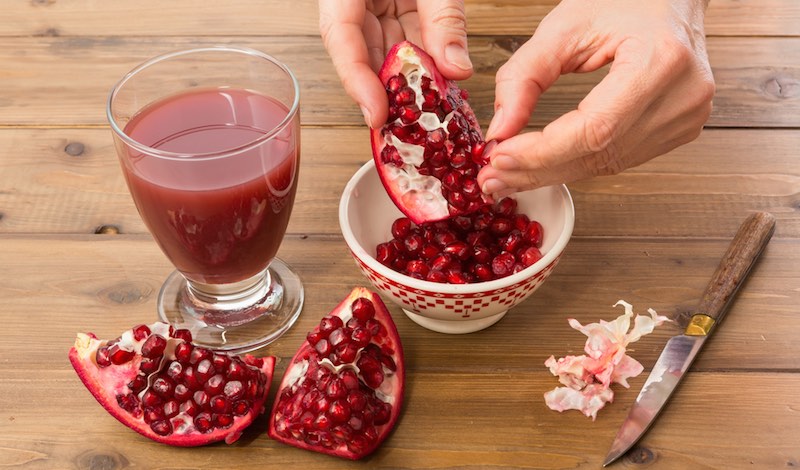
To open a pomegranate, first cut off its ‘crown’, then break it into its pre-formed sections. Roll off the arils with your fingers, and collect them all in a bowl.
The arils and seeds within them are edible. Put these through your juicer to extract the juice. Eating the seeds (those in the centre of the sacs) is a personal choice. If you are comfortable eating them, they can be a good source of fiber for you.
As for me, I love to simply put the arils whole into my mouth, savor the juice and spit out the seeds. This saves time on cleaning the juicer and I’m still able to enjoy the goodness of the juice.
I find that a slow juicer is most effective for extracting pomegranate juice as it is able to separate the juice from the pulp and seeds, with the nutrients and enzymes still intact.
References:
https://www.ncbi.nlm.nih.gov/pmc/articles/PMC4477247/
Some of the links I post on this site are affiliate links. If you go through them to make a purchase, I will earn a small commission (at no additional cost to you). However, note that I’m recommending these products because of their quality and that I have good experience using them, not because of the commission to be made.


 JOIN OVER