
Why Are Soft Drinks Bad And Harmful For You?
Last updated on
EXPOSED!
Discover the truth about the ingredients in soft drinks by popular brands.
The Lure Of Soft Drinks
“Soft drinks” is a term used for beverages that don’t contain alcohol (“hard” liquor). If you really know what the contents of soft drinks are, you would not think it is “soft”. It is really “hard” on your health.
Soft drinks have become so much a part of modern living, especially in major cities around the world. It particularly appeals to the younger generation who drinks soft drinks in place of water.
Soft drinks advertisements target young people who are oblivious to the harm these drinks can do to their bodies. No wonder the people love drinking soft drinks too—they give the refreshing feeling and seem to quench thirsts on a blistering hot day. Vending machines are making the “killing” easier.
If you drink soft/carbonated drinks regularly, I beg you to please stop and read what is it that you are putting into your body. Understand what these soft drinks contain.
Ingredients In Soft Drinks
Sugar
A majority of soft drinks contain large amounts of refined sugar content of up to 15 teaspoons each in a 325 ml can. One can a day gives you more sugar than is necessary for your body.
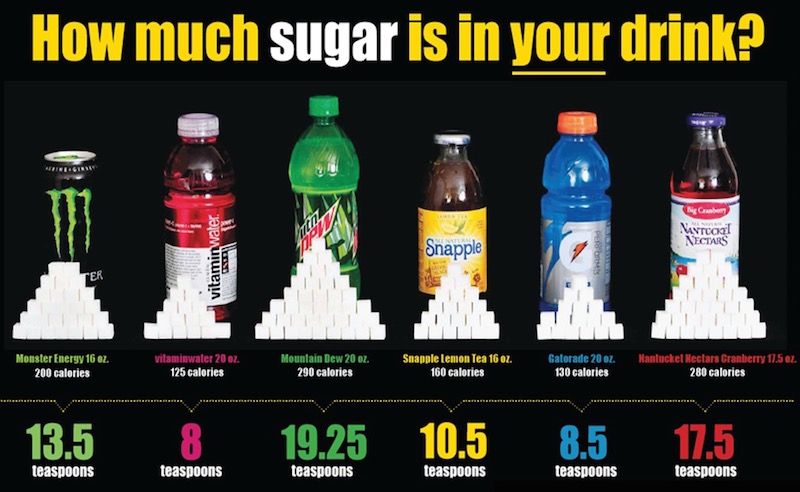
Sugar erodes teeth, increases your risks of diabetes, heart disease, indigestion and skin problems. As sugar enters the bloodstream and increases the sugar level rapidly, it causes a dependency situation whereby the body craves for a constant flow of sugar to maintain its levels. This keeps you craving for more, creating a vicious cycle that gets you hooked.
Artificial Sweeteners
Soft drinks disguised as “diet soda” or “tonic water” contain calorie-reduced sweeteners such as aspartame, acesulfame-K, saccharin or sucralose.
- Aspartame is 200 times sweeter than sugar, so very little is used to sweeten the soft drink. It does enhance the taste of the drink but it also cause numerous adverse side-effects. Common complaints include migraine, memory loss, emotional disorders, blurred vision, ringing in the ears, heart palpitations and shortness of breath.
- Acesulfame-K (Ace-K) is 100-200 times sweeter than sugar, with a slight bitter after-taste. Initial tests have indicated that this substance may be carcinogenic. Even though thorough tests are still incomplete, there are reasons to be careful not to ingest this compound as tests on lab animals have shown rapid increase in cancerous tumors.
- Saccharin is a non-nutritive sweetener which is 300 times sweeter than sugar. It has been proven to cause bladder cancer and is banned in Canada, New Zealand and several European countries. Saccharin is found to be present in Pepsi Diet, Diet Coke and Diet Sarsi.
Caffeine
Caffeine is an addictive drug that enhances the soda flavor. It artificially stimulates the nervous system and increases the heart rate. When consumed, it may temporarily arouse the intellect and diminish fatigue.
Over-stimulation depletes the body of vital energy as it struggles to deal with the toxin that enters the bloodstream. Excessive caffeine consumption is linked to cancers of the bladder and stomach, raised blood pressure and aggravating diabetes symptoms. Worst of all, it may even contribute to birth defects in babies.
Drinking soft drinks after a physical workout can cause calcium and potassium loss which in turn can cause sore muscles and delayed recovery time after exercise.
Acids
Most soft drinks contain acids such as citric, phosphoric and malic or tartaric acids. These acids are what give the drink the refreshing “bite” or “sting” and at the same time preserving the “quality” and sweetness of the drink.
A study was done where extracted human teeth were placed in cola drinks. Within two days, the teeth became very soft and the enamel surface lost much of its calcium.
If you think you would brush your teeth after drinking soft drinks, hear this: Brushing your teeth after drinking an acidic soft drink can increase the damage to your tooth enamel, and dissolving down the gum line.
Many diseases thrive in an acidic environment. For example, the phosphoric acid upsets the body’s calcium-phosphorus ratio and dissolves calcium rapidly, resulting in premature osteoporosis. This same acid burns the human insides.
Consider this, phosphoric acid is used for removing rust from chrome and for cleaning automobile battery connectors. Just imagine what horrendous things these acids are doing to your body, and I’m not even half way done telling yet.
An acidic blood condition weakens the immune system, causes inflammation, headaches, aggravates diabetes and many other diseases. Some cells die in this acidic condition, but some cells actually try to adapt to survive by becoming abnormal malignant cells.
Research has shown that in order to neutralize
a glass of cola, you would have to drink
32 glasses of high pH alkaline water.
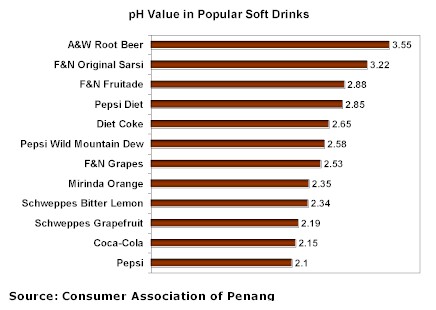
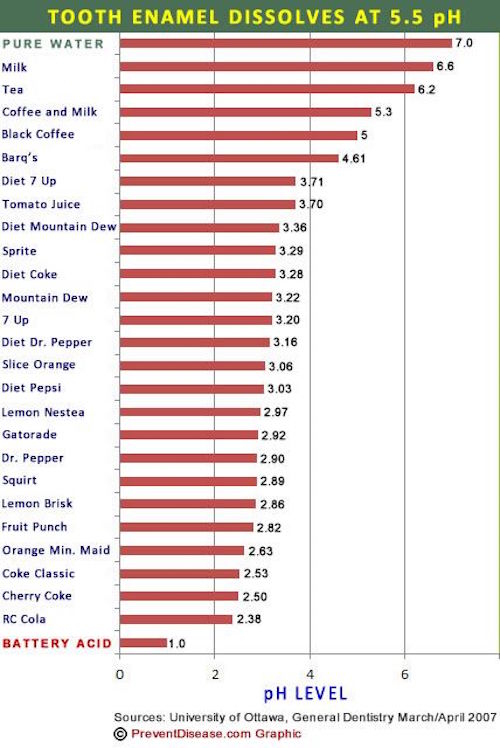
Here’s a list of pH value in soft drinks, to show you how alarmingly acidic these beverages are. Human blood has a pH value ranging between 7.3 and 7.45. Anything under a pH of 5.5 will start dissolving your tooth enamel and have a terribly adverse effect on the body.
Carbon Dioxide
Carbonated drinks are made by injecting carbon dioxide into the water under pressure. The more carbon dioxide injected, the lower the pH, the more acidic it gets, the more fizzy it is.
We all know that carbon dioxide is a waste product exhaled by human. We don’t need carbon dioxide, so why are we taking it by drinking soft drinks? Too much carbon dioxide kills healthy cells. Dead cells cause an acidic environment. As mentioned above, in an acidic environment, some cells may survive by becoming abnormal malignant cells.
Preservatives
Preservatives are added into soft drinks to prevent spoilage, and to prolong shelf life. Storage conditions and time can affect the taste and flavor, and these preservatives help to preserve that.
The labels may list these as “permitted preservatives” but the exceeded amount can cause untold number of health problems.
- Sodium benzoate (a.k.a. benzoic acid) is present in most soft drinks. This chemical is known to cause asthma, rashes and hyperactivity.
- Sulphur dioxide is also used in some soft drinks to preserve the color of say, carbonated lemon juice from turning brown. This chemical is used for industrial bleaching. It is so toxic that repeated exposures to it can cause fainting spells, skin eruptions, swelling, tightening of the chest, shock, coma and even death.
Artificial Flavorings and Colorings
Artificial flavorings are commonly used in making soft drinks to give each flavor its distinctive taste. These have adverse effect on hyperactive children and must be eliminated from their diet.
- Tartrazine is an orange-yellowish drink coloring that is banned in Norway and Finland. It can cause allergic reactions like skin rashes, swelling, excessive mucus and bloodshot eyes.
- Carmoisine is a reddish drink coloring that is banned in the US and Canada. It can cause allergic reactions, food poisoning and even cancer.
- Brilliant Blue is another cancer-causing agent that is now banned in many developed countries. Sadly, it is still being used in my country to produce soft drinks. This chemical can cause chromosomal damage and allergic reactions.
Sodium
Most soft drinks contain some inorganic sodium. Sodium is used as an emulsifying, stabilizing and thickening agent to ensure that the contents of the drinks are kept evenly distributed. Excessive consumption of inorganic sodium thickens and stiffens arteries, leading to stroke, cardiac failure, high blood pressure and many other diseases.
What Do We Do?
Need I say more? Doing this research has given me a major jolt. It is sad that the government allows the manufacture of these killer drinks. It is even sadder that many people I know still drink soft drinks like water, thinking that “they need it” to keep them awake, sigh.
Do yourself and me a huge favor—please cut down or stop drinking any form of soft/carbonated/soda drinks. Instead, turn to healthy fresh fruit and vegetable juices if you value your health. Start today, it is not too late. You can still reverse the damages already done to your body, by taking the first step to learn what is beneficial for you. Choose to live healthy.
Some of the links I post on this site are affiliate links. If you go through them to make a purchase, I will earn a small commission (at no additional cost to you). However, note that I’m recommending these products because of their quality and that I have good experience using them, not because of the commission to be made.

Comments
Leave a Reply


 JOIN OVER
thank you .. this has been a great warning and a wake up call… very informative
Good write-up. I definitely love this site.
Keep writing!
Thank you so much. I was so keen of drinking such drinks but your message is a true alarm turning off my good false favour towards soft drinks.
Thank you for educating me on the danger of soft drinks. I will never take it again.
These we’re eye opening. Thank you very much.