
Guide: Centrifugal Juicers
Last updated on
How Centrifugal Juicers Work
By far the most common type of household juicer, a centrifugal juicer reduces the fruit and vegetables inserted into the juicer into very small chunks, then strains the water content through a filter that catches the chunks, but allows microscopic nutrients and minerals to pass through.
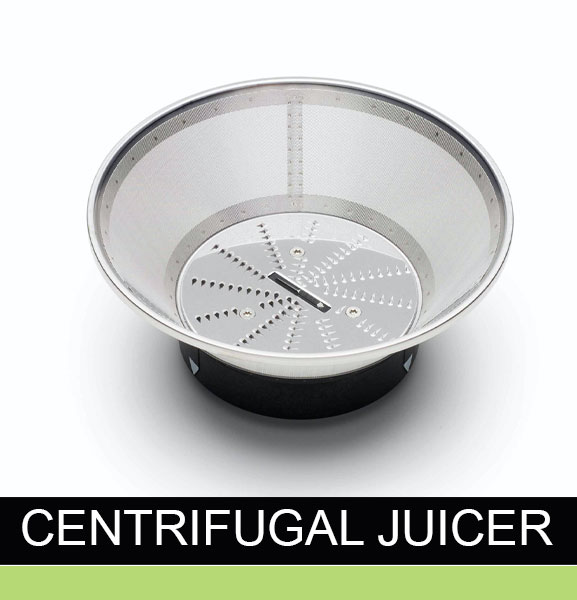
As the name implies, the force acting on the fruit and vegetable solids to extract the juice is centrifugal spinning. The solids, also called the pulp, are then flung out of the pressing area, and directed towards a pulp collection area, usually a detachable container from which you can either dump the solids into compost or use in other recipes.
Why Choose a Centrifugal Juicer?
Juicing is a great way to lead a healthy lifestyle, not only by knowing that the produce you juice is fresh, but also knowing that it has not encountered any further processing that many companies use to extend shelf life or artificially sweeten juices.
Centrifugal juicers are designed primarily for those that want to have their own juice, but also do not want to spend too much time extracting it. They are easy to use and usually come with a speed selection knob to allow for efficient juicing. Lastly, centrifugal juicers are also made to be able to extract large quantities of juice, from a single glass to a couple of gallons, depending on your needs.
Pros & Cons of Centrifugal Juicers
Pros
- Often very affordable.
- Beginner-friendly and easy to use.
- Faster juicing than masticating juicers or other slow juicer options.
- Easier to clean than most other juicer types.
- Less prep time as the feeder chute and slicer/grater take care of most of the hard work, you simply need to size your chunks to fit into the feet chute.
- As centrifugal juicers hold the largest market share in the juicing world, they are very commonly available pretty much anywhere you might think to look for one. As well, replacement parts, should any be needed, are often less expensive and commonly in stock.
Cons
- For the price you are paying, you are getting a device that does only one job: juicing. Other juicer types can double as food processors.
- Faster juicing comes with oxidization, loss of freshness, and shorter shelf life than other juicing methods.
- The heat produced by centrifugal juicers can cause some nutrients to be lost in the juicing process.
- While designs and materials have improved over the years, it is still a realistic expectation that a centrifugal juicer will be noisy.
- Compared to other types of juicers, centrifugal juicers produce more waste per extraction of juice. The wetter the pulp in the pulp bin, the less juice that makes it into your glass and hence, into you.
- Centrifugal juicers, unless specifically stated so on the box, cannot manage greens. Kale, wheatgrass, spinach and the like do not have the requisite weight after grinding or slicing to realistically extract juice through a centrifuge.
What Should I Look for in a Centrifugal Juicer?
Centrifugal type juicers are available across a wide range of budgets and can be found across grocery stores, department stores with kitchenware sections, online, and in specialty shops such as health food stores and juicing stores.
As such, having a keen eye for the following parts of the juicer can help you make an informed choice on the best juicer for your needs. If you’re interested in a centrifugal juicer, look for the following features or check out our best centrifugal juicer picks.
Ejection System
While it is common for centrifugal juicers to remove the pulp from the juicing area, there are some models that do not. An ejection system that stores the pulp in a separate container exponentially increases the ease of use, and ease of maintenance, of your juicer. As well, having the pulp removed from the juicing are means that you can continue juicing quickly, instead of having to remove the pulp manually and cleaning the centrifuge before continuing juicing.
Construction
While plastics are very common in this type of juicer, these plastics should be used only in areas that do not necessitate the need for stronger materials. The actual centrifuge, as well as the juicing basket and the motor pin to attach the basket to, should all be of stainless steel metal. The feed chute at the top of the juicer can either be made of plastic or metal, but make sure it is thicker, stronger plastic that feels durable and strong in the hand. The basic rule is: If something feels cheap, it usually is cheap.
As well, in specific to the feed chute, consider what types of things you will be juicing. A small feed chute will make juicing, for example, beets difficult without much more prep time, while a larger feed chute that can accept larger pieces cuts down on prep and gets you your juice faster.
Lastly, the parts that you can clean in and of the juicer for maintenance should be easy to access, easily removable, and in many cases, dishwasher safe. The cover, centrifuge bowl, filter, spout, and ejection system/container should all be accessible to clean and wipe down or remove and wash as needed.
Speed & Power
By design, centrifugal juicers naturally juice quickly and easily, however, this can sometimes not be the best thing. The faster something goes, the more heat it generates. Heat can damage or destroy enzymes and nutritionally beneficial components of the juice. If a multi-speed juicer is out of your budget range, it is often safer to go with a low-speed juicer to keep your juice as healthy as possible.
Power directly relates to the speed of the juicer, and is an important consideration if you plan on juicing heavier or denser fruits and vegetables, such as carrots, apples, and beets. While a juicer may claim that it can spin faster than any other juicer on the market, if it doesn’t have the raw power, usually claimed in Watts, to spin the centrifuge while juicing, it can result in poor juices or, in extreme cases, damage to the juicer.
Noise
Directly tied with speed and power is noise. Many juicers will spin at over 2000 to 3000 RPM as their base speed and can have power ratings from 100 Watts to well over 500 Watts. When something is spinning that fast with that much power behind it, there is going to be some noise during the juicing. A common rule is that if your juicer has an ejection system, that should realistically be the loudest, or second loudest, part of the juicer. Well designed juicers will mask a lot of the noise with quality materials and design to direct sounds away from openings.
Warranty
As with any electronic device, having a good warranty over multiple years is the best combination. Many lower-priced centrifugal juicers will come with a 1-year warranty, and the warranty will usually only cover manufacturing defects or parts not serviceable by the end-user.
Higher quality warranties will often be 2 or 3-year warranties and can cover everything from parts breakage during normal use following the manufacturer’s instructions, to servicing or replacing your juicer if the worst happens under normal operation.
How to Get the Most Out of Your Centrifugal Juicer
- Use fresh produce for juicing. Fresher produce has more water content, so when selecting your fruits and vegetables to extract juice from, try to choose the freshest available to you
- Cut your fruits and vegetables into the appropriate size. All centrifugal juicers will require some prep time, namely cutting your fruits and vegetables to sizes that will fit the feed slot. Do not try to force more than will fit down the feed chute, and if something does get stuck, TURN OFF AND UNPLUG your juicer before removing the cover to clear the blockage.
- It is very important to clean centrifugal juicers regularly. The spout, feed chute, centrifuge bowl, slicer, ejection chute, pulp container, and inside the main centrifuge area should all be cleaned as directed in the user manual. Leaving even a small amount of raw juice can cause that juice to spoil inside the unit, and can sour juices, cause blockages, and in severe cases cause illness.
- Only juice what you need to juice. If you need a glass of juice, do not juice 24 carrots. Only juice what you plan on drinking within the next day or so.
Our Top Centrifugal Juicer Pick
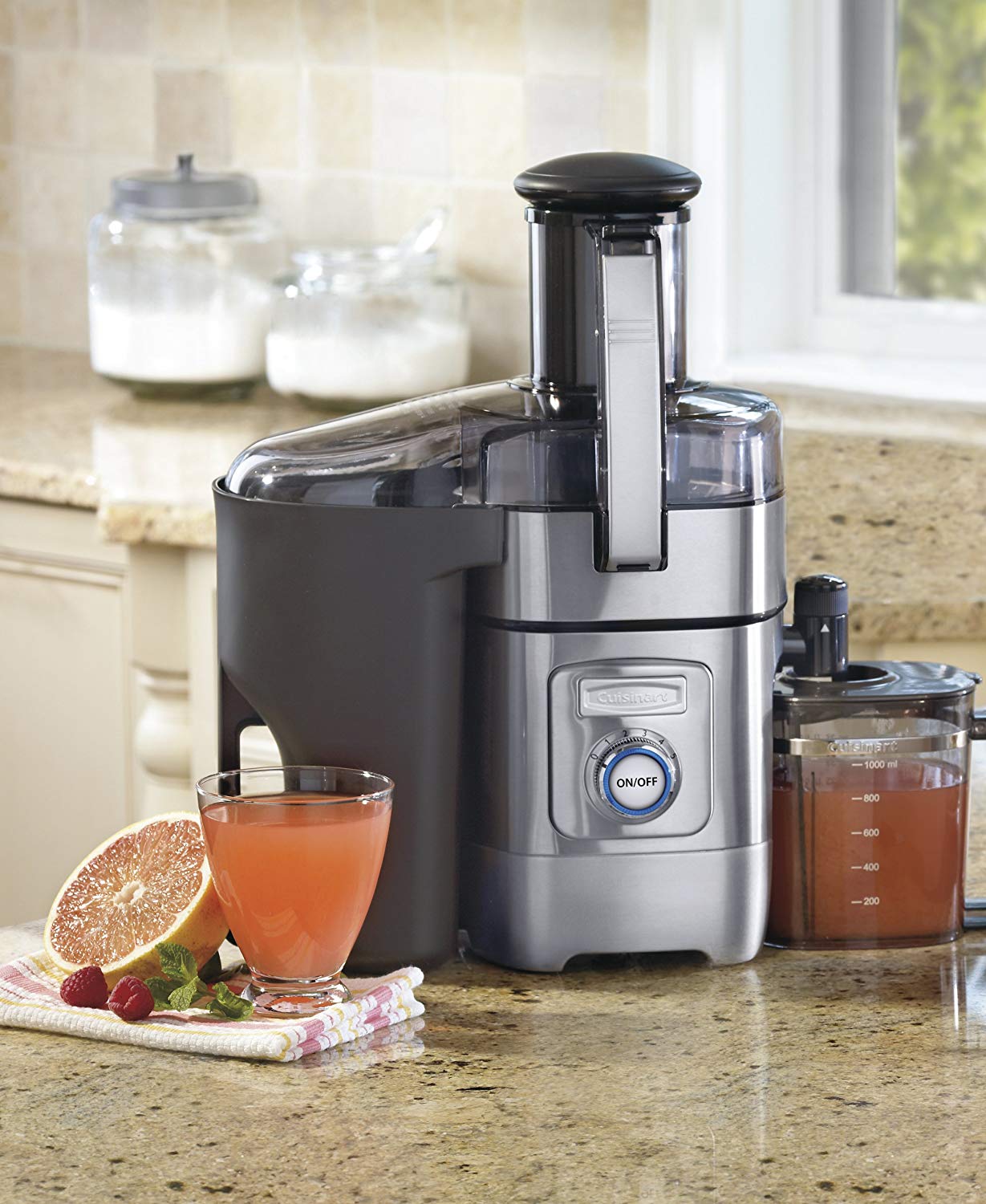
Our top pick is the Cuisinart CJE 1000 5 Speed Centrifugal Juicer. From our “What Should You Look For” list above, the CJE 1000 has it all: a very large, round feed chute with an accompanying plunger; a very easy to access pulp bin and easy to clean ejection area; easy to access spout for your juices to exit; quieter operation compared to many other models and brands; and a 1000 Watt power rating with 5 speeds selectable, allowing you to juice pretty much any fruit or vegetable as you desire. And the proverbial cherry on top is that it comes with a limited 3-year warranty.
Get Yours on Amazon
When you make a purchase via one of our affiliate links, we may earn a small commission. We buy all the ingredients and juicers for our reviews and recipe posts and rely on this revenue to maintain our website. Thank you for supporting us 🙂
For more centrifugal juicer recommendations, read our list of Best Centrifugal Juicers here.
Some of the links I post on this site are affiliate links. If you go through them to make a purchase, I will earn a small commission (at no additional cost to you). However, note that I’m recommending these products because of their quality and that I have good experience using them, not because of the commission to be made.


 JOIN OVER