
Asparagus Is A Highly Alkaline Food For Scrubbing Out The Kidneys, Bladder And Protecting Liver Health
Last updated on
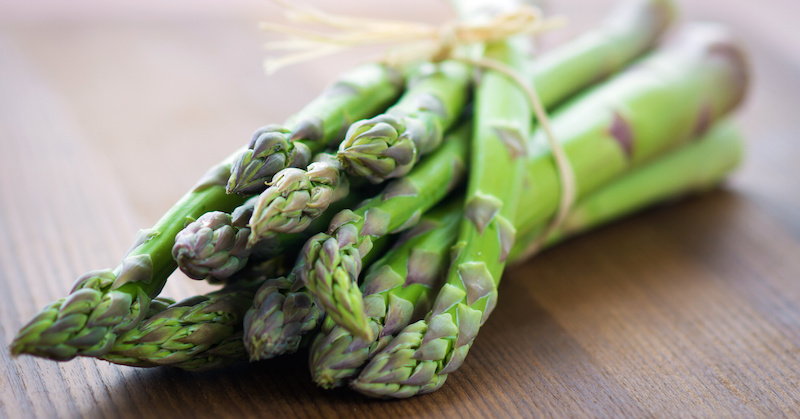
Asparagus is a member of the lily family which includes leeks, garlic and onions. It has a spear top with bud-like, compact and pointed head.
Perhaps it may surprise you that there are a few hundred varieties of asparagus but only a small number is edible.
Although it’s available all year round, asparagus usually is most found and best in spring and is harvested when it is about 6 to 8 inches tall.
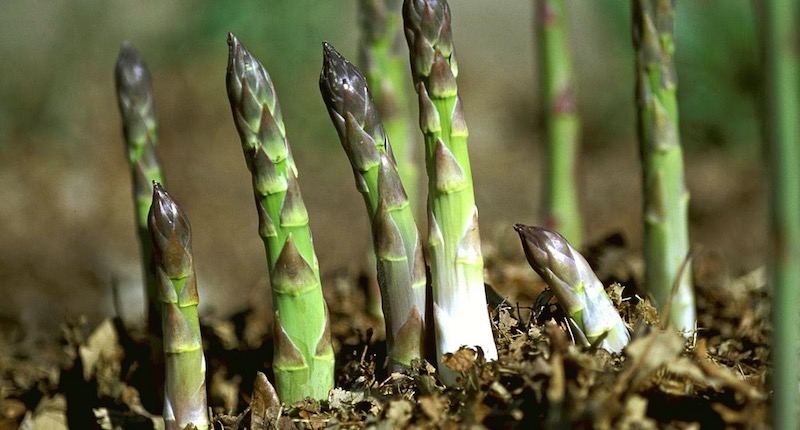
The variety we eat is usually green or greenish purple in color. There is also a white variety which is grown underground to preserve its delicate flavor. But these sunlight-deprived stalks also lack the goodness of chlorophyll.
Asparagus is expensive compared to other more common vegetables simply because it is harvested by hand and produced in small volumes.
Nutritional Benefits Of Asparagus
Asparagus is an alkaline food which is rich in protein but low in calories and carbohydrates. It is an excellent source of potassium, folate, vitamins A, C and K, and traces of vitamin B complex.
A good source of dietary fiber, asparagus is also rich in niacin, phosphorus and very low sodium. And certainly most impressive is that it is one of those few vegetables that actually has the calcium and magnesium in the ideal ratio of 2:1.
Health Benefits Of Asparagus
Asparagus has an abundance of an amino acid called asparagine, that helps to cleanse the body of waste material. As a result, some people’s urine may have a foul odor after eating asparagus. Don’t worry if this happens to you. Just be glad that your kidneys are getting a good cleansing.
Asparagus is one of the few vegetables that is dense in healthful nutrients that help many ailments.
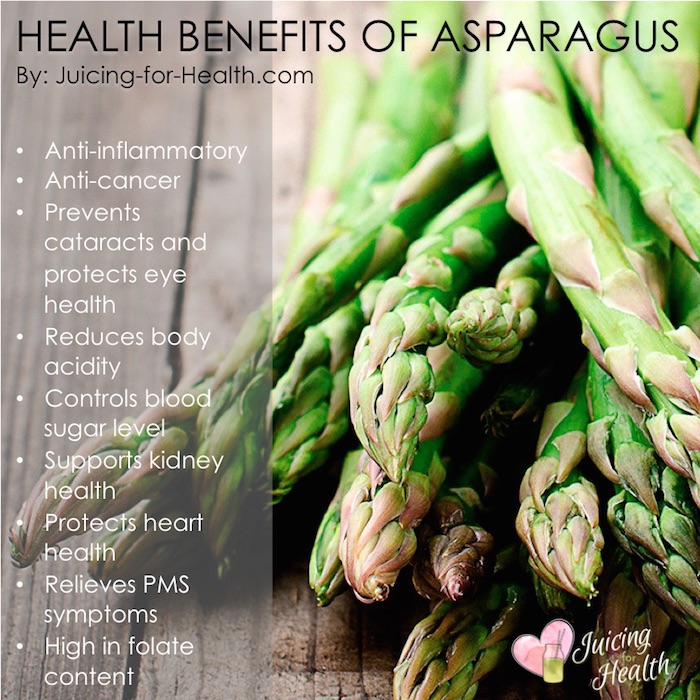
Acidity, Blood: The high alkalinity of this wonder juice is effective in reducing the acidity of the blood and helps cleanses the tissues and muscles of waste.
Arthritis and Rheumatism: A unique phytochemical in asparagus that produces anti-inflammatory effect helps relieve arthritis and rheumatism.
Bowel movement: Consume asparagus regularly for its mild laxative effect and dietary fiber that provides for regular bowel movement.
Cancer: Asparagus is a prime source of anti-oxidant and glutathione that can help prevent the dreaded cancer.
Cataracts: The anti-oxidant and glutathione in asparagus prevents the progression of cataracts and other eye problems.
Diabetes/Hypoglycemia: The healthful minerals in asparagus juice make it an important diet for people who are controlling their blood sugar levels. However, it is not to be taken by people with advanced kidney diseases.
Diuretic: Asparagus is a wonderfully diuretic vegetable and its efficacy is more pronounced when it is taken in juice form.
Heart disease: Drink a small amount of asparagus juice mixed with raw honey three times a day daily to strengthen a weak or enlarged heart.
Kidneys: The diuretic and alkaline properties of asparagus help prevent or dissolve kidney stones. It helps break up oxalic and uric acids formed in the kidney.
Liver: Chlorophyll and the other phytonutrients in asparagus are excellent food for detoxifying the liver and providing support for organ health.
PMS symptoms: The diuretic effect of asparagus juice helps relieve premenstrual swelling and bloating. The magnesium in this wonder juice also help relieve irritability, fatigue, depression, etc.
Pregnant women: The high content of folate, calcium and other minerals in asparagus are important in reducing the risk of birth defects and low birth weight. The diuretic effect of the juice is also a big help in reducing water retention in pregnant women.
Asparagus And Kidney Health
Asparagus is most well-known for boosting kidney and bladder health. The rich phytonutrients go deep into the organs to scrub out toxins. Some of the specific actions of asparagus for the renal system are:
- Supports kidney and bladder functions
- Increases urine production due to its diuretic properties
- Ensures smooth urination flow
- Cleanses the kidneys and bladder
- Breaks up uric acid and expelling them
- Removes toxins/bacteria due to its anti-parasitic nature
These supporting actions keep the renal system in tip-top condition, reducing uric acid and other toxins/pathogens in the system, ensuring regular flow of urine and reducing inflammation of the organs.
Consumption Tips
When buying asparagus, choose straight, firm stalks with tight tips. Always eat fresh but if have to store, keep them dry and tightly-wrapped in a plastic bag for up to three days in the refrigerator.
Eat asparagus for its dietary fiber. But also make juice out of it, especially using the tough stem ends.
Here’s a suggestion for making a nice glass of asparagus juice with all the best ingredients for renal health.
When eating asparagus, always lightly steam, rather than boil, to preserve the sodium and other minerals from boiling away.
Some of the links I post on this site are affiliate links. If you go through them to make a purchase, I will earn a small commission (at no additional cost to you). However, note that I’m recommending these products because of their quality and that I have good experience using them, not because of the commission to be made.

Comments
Leave a Reply


 JOIN OVER
Asparagus is a nutritious, vitamin-packed vegetable that I enjoy eating grilled with a sprinkle of grated Parmesan cheese.
I’d like to add that asparagus is also used to treat urinary tract infections and inflammation.
It’s also a good source of zinc and it may help enhance male fertility (sperm production).
Conflicted report. Breaks up uric acid? I have gout and asparagus is a gout trigger food. So if if breaks up uric acid, it should prevent not trigger.
One of the other reasons why asparagus is expensive is because it takes about 2 years to grow one crop.
Learned lots from the asparagus article. We grow it and eat it but do not juice it.
Make a delicious omelet with asparagus and fresh mushrooms. The South Beach Diet book has the recipe. Look it up.
Thank you so much for the information and I will be eating more of this wonderful veggie. Mine died in the ground. I’d planted it last year. Gotta get more to plant.
Any recipes for grilling or broiling in the oven
Is there any instant juice of asparagus